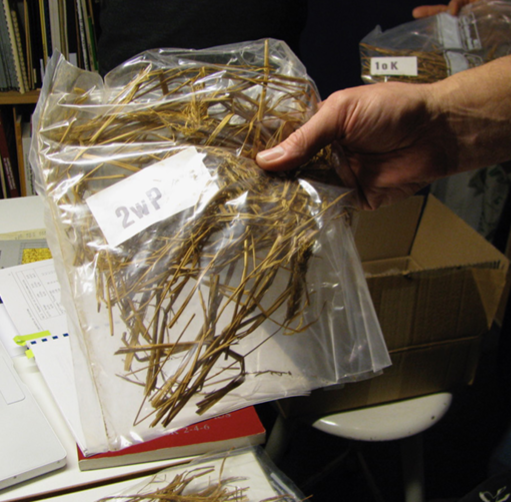
| EraAncient | RegionGlobal | Milestone Clay-coated straw has been used as a wall insulation material for thousands of years across Europe, the Middle East, and North Africa. The clay coating preserves the straw, deters insects, regulates humidity, and provides fire and mold resistance. |
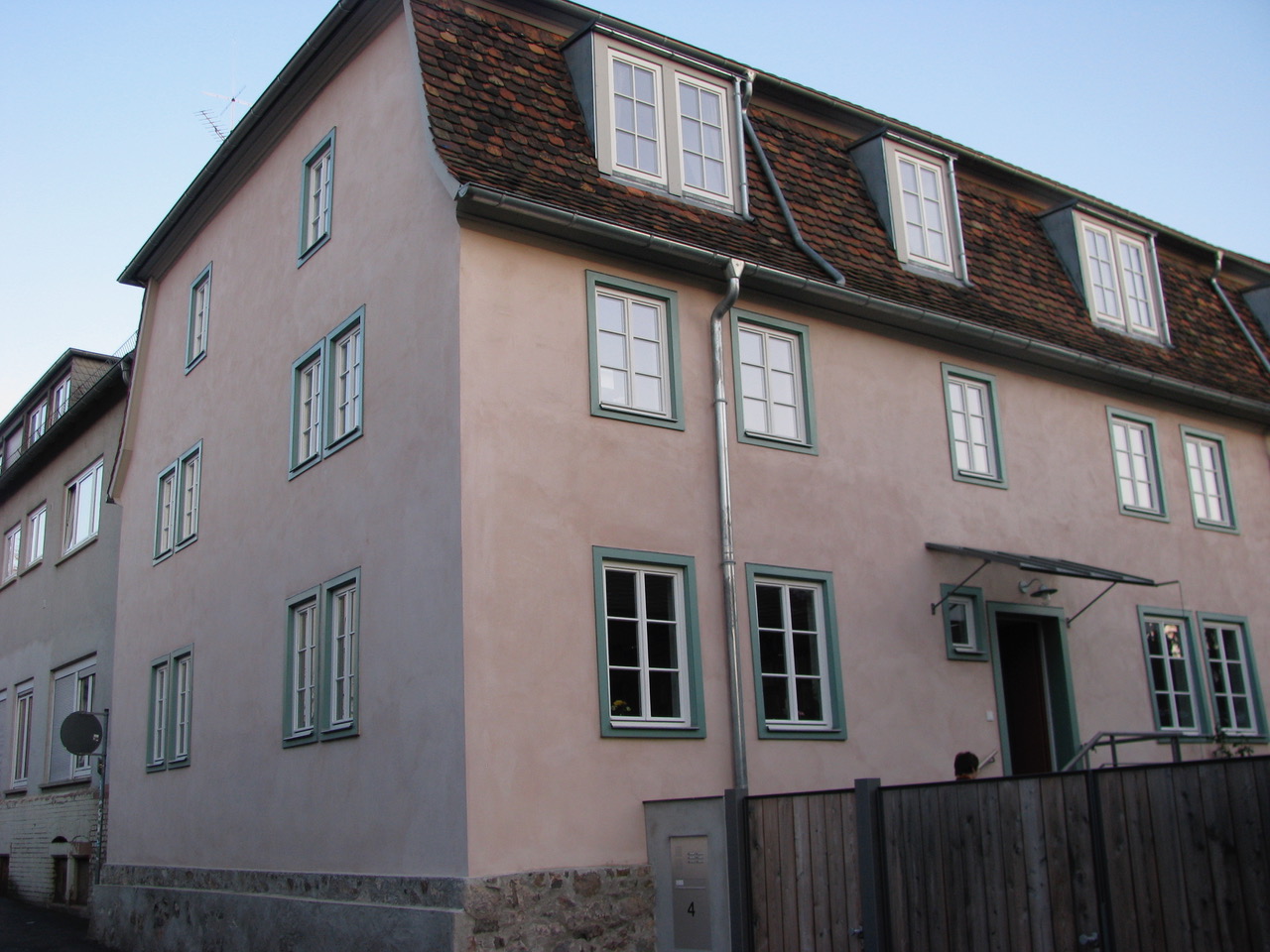
| Era1990s | RegionGermany | Milestone German architectural historian Franz Volhardt, restoring a 700-year-old building, discovers perfectly intact straw inside the walls. Recognizing the material's durability, he modernizes the installation process and conducts the first formal R-value tests — launching the contemporary LSC movement. |
| Era1990's | RegionMidwest
Fairfield, Iowa | Milestone Robert LaPorte, master timber framer, travels to Germany to learn about Light Straw Clay from Frank Andresen and brings the technology to his Iowa construction company, where he holds workshops. |
| Era1990s | RegionMidwest
Madison, WI | MilestoneArchitect Lou Host-Jablonski travels to Germany following one of Robert LaPorte’s workshops to study light straw clay (LSC) with Franz Volhardt, accompanied by scientist Douglas Piltingsrud and Dr. Susan Thering, professor at the University of Wisconsin–Madison. Inspired by the experience, Dr. Thering secures a grant to subsidize natural building workshops teaching Native American communities construction techniques for affordable, high-performance buildings. |
| Era1990s | RegionSouthwest
Santa Fe, NM | MilestoneRobert LaPorte met his future partner Paula Baker-LaPorte — whose chemical sensitivities led her to specialize in non-toxic materials — at a Building Biology gathering in the early 1990's. The two settled in New Mexico and co-founded Econest, a design-build firm that developed an innovative model in which students pay to work on commissioned homes for 1–3 weeks, learning both LSC construction and timber framing on the job. This program teaches hundreds of builders across the US and becomes the longest-running LSC school in the country. Robert & Paula Laporte are advisors to LSCC. |
| Era2000s | RegionNorthwest
Portland, OR | Milestone Lydia Doleman, after attending an Econest seminar, begins building with LSC in Oregon and establishes herself as a regional authority on the material and its application in the Pacific Northwest climate. |
| Era2010's | RegionMidwest
Madison, WI | Milestone The University of Wisconsin grant secured by Dr. Susan Thering supports material testing and refinement of clay-to-straw ratios, installation techniques, and equipment, drawing on Douglas Piltingsrud’s expertise in microscale material interactions and Scott Cherry’s extensive LSC construction experience. Lou develops a method for integrating LSC with advanced 2×6 framing to minimize lumber use and conducts rigorous thermal testing at the U.S. Forest Products Laboratory. Grant-funded research ultimately informs the material’s definition in the International Residential Code (IRC). |
| Era2010s | RegionNational | Milestone Lou, Robert, Paula, Doug Piltigsrud, Martin Hammer, and others collaborate to draft the official building code definition for LSC. Their work is adopted into the 2015 International Residential Code as IRC Appendix AR — a landmark step toward mainstream code acceptance. |
| Era2020s | RegionNorthwest | Milestone Placecraft begins experimenting with prefabricated LSC panels, exploring ways to industrialize production and bring LSC construction within reach of conventional building timelines. Zafiro Papastratakos begins travelling across the U.S. to document existing LSC buildings as precedent studies for Lou Host-Jablonski’s reference book and develops the Light Straw Clay Collaborative in response to the need for a professional organization to support this incredible community of practioners. Threshold Builds explores the potential of developing a regenerative neighborhood built of LSC. |